1. Hormuz closed again -- Friday's bullish reset gets fully reversed in under 72 hours
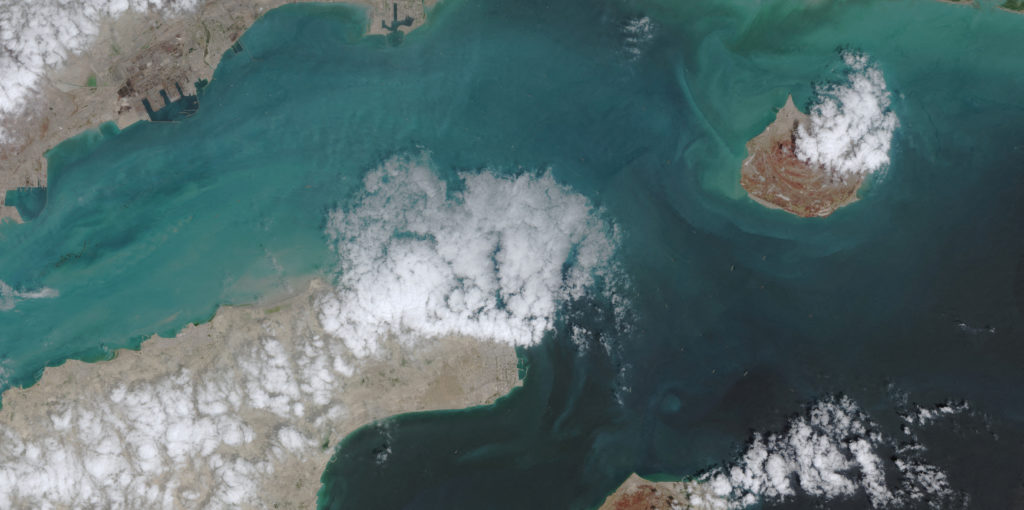
The single most consequential story of the weekend: Iran reversed its Friday declaration that the Strait of Hormuz was "completely open" to commercial traffic. The trigger was President Trump's decision to maintain the US Navy blockade of Iranian ports despite the Lebanon ceasefire. Tehran's response was immediate -- Revolutionary Guard vessels fired on multiple ships in the strait, the Navy seized an Iranian-flagged cargo ship en route to Hormuz and, per Trump's own account, "blew a hole in its engine room." Iran then formally reclosed the strait on Saturday.
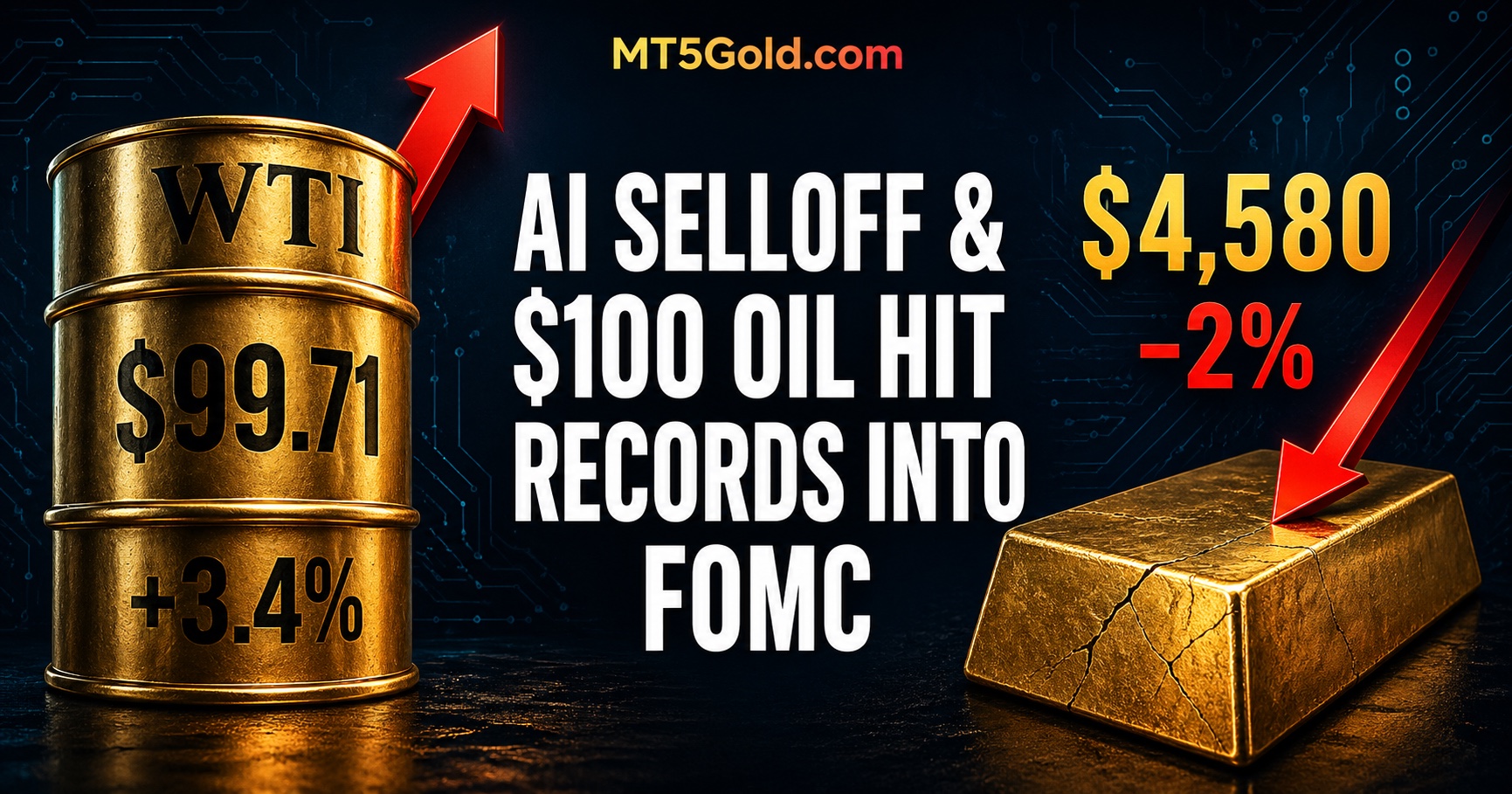
Approximately 20 million barrels per day -- roughly 20% of all seaborne oil -- transit Hormuz. WTI for May delivery reopened this morning at $88.50, up 5.5% from Friday's $83.85 close, with intraday prints as high as $90.33. Brent crude surged 6.5% to $96.25. The practical effect is that Friday's 12% demand-relief trade has been unwound in a single weekend and the energy market is now back to pricing the active war premium that dominated price action through mid-April. Energy Secretary Chris Wright went on record saying US consumers "likely will not see sub-$3 gasoline until next year." The ceasefire expiration on Wednesday April 23 is now the next binary catalyst.
- WTI at $88.50, +5.5% from Friday close -- the Hormuz war premium is fully restored; Friday's $83.85 print was the head-fake
- US Navy seized Iranian cargo ship, Revolutionary Guard fired on vessels -- this is escalation, not de-escalation; no credible path back to reopening near term
- April 23 ceasefire expiry is the next binary -- extension = oil caps near $90-92; collapse = $95-100 retest
- 20M bpd chokepoint status intact -- every trading session now has headline risk; position sizing should reflect this
2. S&P 500 fades from 7,126 ATH -- futures -0.8% on Iran shock, breadth still intact
Equity futures opened Sunday night roughly 0.8% lower on the Hormuz reclosure headlines and traders arrived Monday to a full risk-off tape. Dow futures shed 425 points (-0.9%), S&P 500 futures fell 0.8%, and Nasdaq-100 futures tracked the move lower. The S&P 500 printed 7,099 in early trade -- still only about 0.4% below Friday's 7,126.06 all-time high but marking the first meaningful pullback in four weeks. The Dow sits near 49,399 and the Nasdaq near 24,313.
The important nuance: the selling is macro-driven, not earnings-driven. Q1 bank prints were strong across JPM, Goldman, Citi, BofA, and Morgan Stanley, TSMC delivered +58% YoY profit with 30%+ full-year guidance, and Tesla taped out its AI5 chip last week. The AI capex story, the dealmaking recovery, and the consumer-pricing-power thesis are all intact. If Iran headline risk stabilizes into the April 23 ceasefire decision and the FOMC holds as expected on April 28-29, the 7,126 breakout level is what the tape defends. A sustained close below 7,000 would signal the rally has rolled over and would likely coincide with WTI sustaining above $95.
- S&P 7,099 -- first meaningful pullback in 4 weeks but structurally fine -- the 7,126 breakout level is the line in the sand
- Futures down 0.7-0.9% is a macro reset, not an earnings problem -- Q1 prints were strong and fundamentals unchanged
- 7,000 is the level that matters -- a close below it re-opens a 6,900-6,850 retest; staying above it keeps dip-buyers engaged
- Watch chip earnings Tue-Thu (AMD, SAP, mid-cap software) -- post-TSMC read-through is the next bullish catalyst if Iran stabilizes
3. Bitcoin slips to $74.7K -- the fourth Iran-scare, shallower than the last three
Bitcoin pulled back to $74,700 this morning, down roughly 1.6% over 24 hours after trading to $75,573 on Thursday and holding $75K through the weekend. The weekend sell-off was triggered by Iran rejecting a second round of US peace talks on Saturday, taking BTC briefly to $73,753 before the dip was bought. Total crypto market cap sits near $2.4 trillion. Ethereum held $2,316 (-0.2%), XRP traded near $1.40, and Solana consolidated. Per Invezz and CoinCentral, the estimated total market cap wiped over the weekend was roughly $83 billion before the Monday bounce.

The important pattern: this is the fourth major Iran-related shock crypto has absorbed since the conflict began in early March, and each pullback has been shallower than the last. The March 1 shock took BTC from $82K to $72K (-12%), the late-March blockade announcement took it from $77K to $73K (-5%), the April 8 ceasefire-then-reversal did $76K to $74K (-2.6%), and this weekend's reclosure has been roughly $75.5K to $74.7K (-1.1%). The read-through is that the marginal seller on geopolitical headlines has largely exited and the institutional bid from spot ETFs is now the dominant flow. Holding $73K on this pullback is the setup for a retest of $76K-$78K if the April 29 FOMC delivers even a mildly dovish signal.
- BTC $74,700, -1.6% on 4th Iran shock -- shallower than the prior three; marginal seller has largely exited on geopolitics
- $73K is the support -- holding it keeps $78K-$80K in play post-FOMC
- ETH $2,316, total market cap near $2.4T -- coiled; no alt leadership until BTC direction clears
- Spot BTC ETF flows are the new price floor -- institutional bid absorbs geopolitical dips
4. Gold fades to $4,815 -- Friday's $4,867 peak gives back as paper-gold positioning resets
Gold spot pulled back to $4,815 in early Monday trade, down 0.68% from Friday's $4,867.92 close. On the surface it is counterintuitive -- Iran escalation should be bullish for gold. The read is that Friday's rally occurred into a very crowded long position heading into the weekend and Monday's open has brought profit-taking by fast money, even as the underlying geopolitical risk worsened. Structural buyers -- PBoC (16 consecutive months of accumulation, 2,309 tonnes official reserves), India, and other EM central banks -- have not changed behavior, so the floor remains well-supported.
The realistic path into the April 28-29 FOMC is consolidation in the $4,780-$4,870 range unless one of two things happens: the ceasefire collapses on April 23 (bullish -- $4,900-$5,000 reopens) or Powell delivers a hawkish hold on April 29 (bearish -- $4,750 support gets tested). CME FedWatch still shows 86% probability of a hold at the current 3.50%-3.75% range, so the risk is purely about the tone of the statement and the presser.
- Gold $4,815, -0.68% from Friday's $4,867 print -- paper-gold profit-taking, not a structural shift
- $4,800 is the key support -- holding it keeps $5,000 in play on an April 23 ceasefire collapse
- PBoC 16 consecutive months accumulation -- central bank floor intact
- Dovish Powell = $5,000 in play; hawkish hold = $4,750 retest
5. What to Watch Today and This Week
- Monday Apr 20 -- Leading Economic Index (March) at 14:00 UTC: Consensus is -0.2% MoM. A surprise upside could marginally shift rate-cut timing expectations. IMPACT: LOW-MEDIUM.
- Monday Apr 20 -- Iran/Hormuz headlines all day: Any indication of backchannel diplomacy ahead of the April 23 ceasefire expiry will flip oil 3-5% in either direction. IMPACT: EXTREME.
- Tuesday-Thursday Apr 21-23 -- Chip and software earnings: AMD, SAP, and mid-cap semi/software prints give the post-TSMC read-through; any weakness here breaks the AI capex thesis for May earnings. IMPACT: HIGH.
- Wednesday Apr 23 -- Ceasefire expiration: Extension caps oil near $90-92 and rebuilds the equity bid; collapse opens $95-100 WTI and a 7,000 SPX test. IMPACT: EXTREME.
- Tue-Wed Apr 28-29 -- FOMC meeting + Powell presser: 86% hold priced. Tone is the swing factor -- dovish surprise = gold $5,000 and BTC $78K-80K; hawkish hold = USD spike and equity/crypto stall. IMPACT: EXTREME.
For positioning across oil, crypto, equities, and gold into this week's binary catalysts, Bybit's TradFi platform offers tight spreads on BTC, ETH, SPY, and WTI futures with defined-risk tools. See Sunday's weekend recap for the full context on Friday's reversed Hormuz trade and the FOMC setup, and Saturday's weekly roundup for the top stock and crypto stories of the week.